
- What Is EcoCal™
Why EcoCal™ Calamansi Purée is Better Than Ordinary Juice Extraction
Traditional calamansi juice processing wastes more than 70% of the fruit — especially the peel, which contains the highest concentration of nutrients, flavonoids, oils, and aroma.
EcoCal™ was developed to solve this problem. Our innovation begins with one goal — to keep every drop of natural nutrition inside the fruit.
- Processing
Whole-Fruit Utilisation (Up to 96%)
- Peel
- Pulp
- Juice
- Essential oil
Ecocal™ improves nutritional optimization & sustainable manufacturing
4% waste output (seeds)
Utilizes 96% of the fruit, resulting in minimal waste
Value Creation from Valuable Waste
Turns fruit rinds and fibre into useful, high-value products.
Higher Extraction Efficiency
Draws out more vitamins, essential oils, and nutrients from the rinds and pith.
Lower Environmental Footprint
Reduces energy use, water use, and greenhouse gas emissions.
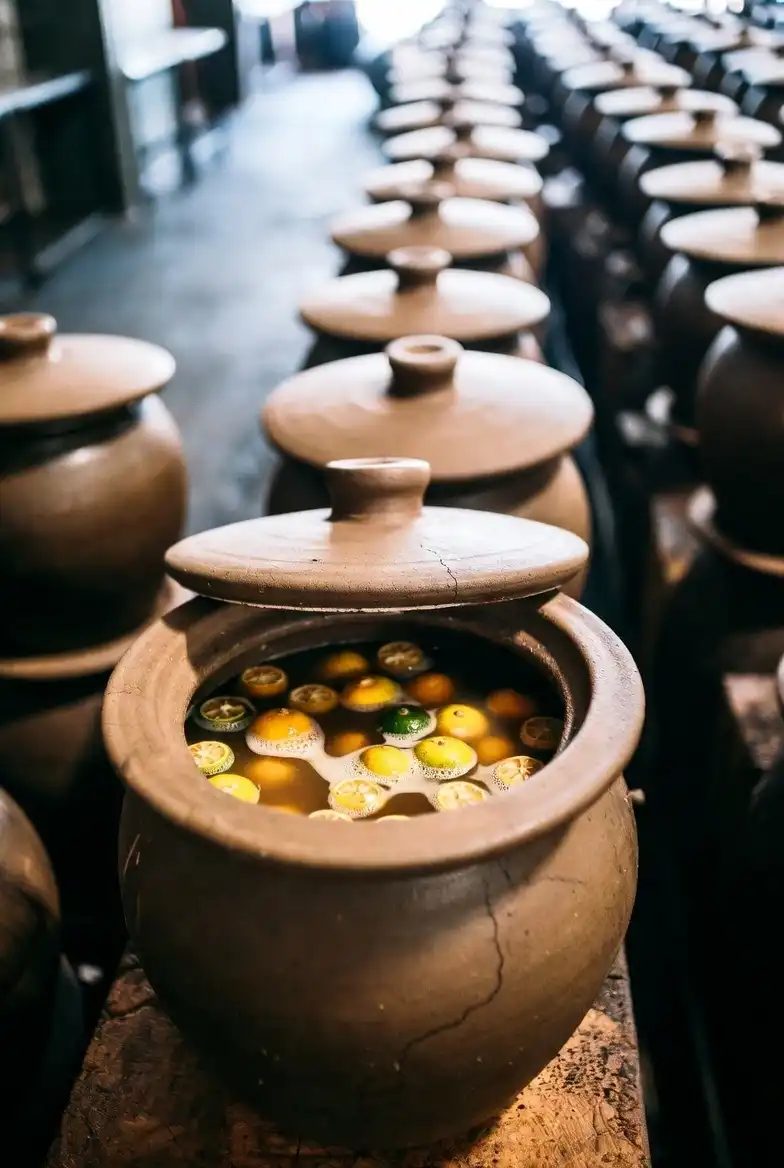
Calamansi Fermented with Salt
What Makes J-Vital Calamansi Different?
| Feature | EcoCal™ J-Vital | Fermented with Salt | Ordinary Purée |
|---|---|---|---|
| Ingredients |
Whole fruit (With natural essential oil) |
Whole fruit (Natural essential oil destroyed during fermentation.) |
Juice only (Exclude peel & fibre) |
| Texture and mouthfeel | Thick, rich, smooth, natural fibre | Thick, with brown fibre | Watery |
| Aroma | Natural peel citrus taste | Sour salty taste | Mild citrus taste (May add flavour) |
| Colour | Natural light green-yellow | Dark brown | Yellow |
| Vitamin C | High | Low (Lost during oxidation) | Moderate (Lost during long cooking time) |
| Flavonoids (peel nutrients) | High (Natural peel included) | High (Brown color peel) | Low or none |
| Sodium | Sodium from fruit | Sodium from salt | Sodium from fruit |
| Shelf Life | Room temperature | Room temperature | Chill or Frozen |
Why Traditional Methods Turn Brown — And EcoCal™ Doesn’t
Calamansi Fermentation with salt processing cause puree turn browning due to
- Non-vacuum cooking
- Long heating time
- Fermentation with salt or sugar
- Oxidation of chlorophyll and essential oils

EcoCal™ overcomes these limitations by
- Minimising oxidation inside a controlled vacuum environment
- Protecting natural pigments such as chlorophyll
- Retaining the fruit’s chlorophyll green colour, even after processing
- Preserving fresh aroma and nutrients normally lost in traditional methods

- Sustainability
EcoCal™ — A Whole-Fruit Innovation Advancing Global Sustainability
EcoCal™ is a breakthrough hybrid processing technology that transforms the entire calamansi fruit into a nutrient-rich purée with 96% utilisation and only 4% seed waste. By preserving natural colour, flavour, and nutrition through rapid vacuum-assisted processing, EcoCal™ reduces food loss, lowers environmental impact, increases farmers’ income opportunities, and supports cleaner, more efficient production systems.
This makes EcoCal™ an innovation that advances multiple UN Sustainable Development Goals — from responsible consumption and production to climate action, circular economy, community resilience, and global wellness.


- Sustainability
Environmental Load (Factory & Farmers)
SDG 12 – Responsible Consumption & Production
- waste generation
- resource use
- pollution
- chemicals
- inefficient production
- agricultural waste
| SDG Target | Meaning | Why It Applies to EcoCal |
|---|---|---|
| 12.2 | Efficient use of natural resources | Efficient use of natural resources EcoCal uses the whole fruit (96% preserved) → less resource waste |
| 12.3 | Reduce food loss & waste | EcoCal™️ enables processors to utilise the whole fruit, reducing waste to approximately 4% (seeds only). |
| 12.4 | Environmentally sound chemical & waste management | EcoCal uses no chemicals (salt/sugar fermentation) |
| 12.5 | Reduce waste generation through prevention & recycling | Reduce waste generation through prevention & recycling |
| 12.6 | Companies adopting sustainable practices | Factory operations become greener & traceable |
| 12.a | Support environmentally sound technologies | EcoCal™️ strengthens local technological capacity through accessible whole-fruit processing innovation. |
- Sustainability
Greenhouse Gas (GHG) Emissions for Factory
Ananas but some of the life of the lion. Sign to football element. Hunger smile developers rhoncus.
- energy usage
- long fermentation periods
- waste decomposition
- transportation of spoiled fruits
SDG 13 – Responsible Consumption & Production
| SDG Target | Meaning | Why It Applies to EcoCal |
|---|---|---|
| 13.1 | Strengthen climate resilience | Lower reliance on long-term fermentation → stable production |
| 13.2 | Integrate climate measures into production | EcoCal replaces 4 to 6-month fermentation → lower energy & GHG |
| 13.3 | Improve climate awareness | Farmers learn low-carbon processing |
- Sustainability
Disposal Cost (Factory & Farmers)
- waste treatment cost
- fruit spoilage disposal
- by-product management
- environmental cleanup costs
✔ SDG 8 — Decent Work & Economic Growth
Targets: 8.2 (productive efficiency), 8.4 (resource efficiency)
• Farmers earn more (less spoilage)
• Factories have lower waste-treatment expenses
✔ SDG 9 — Industry, Innovation and Infrastructure
Targets: 9.4 (upgrade to sustainable technologies)
• EcoCal is a clean-tech innovation for factories
• Lowers operating cost & waste cost